Multiple Tooth Implants in Sydney CBD
Several missing teeth is a different problem to one. It needs a different plan. When more than one tooth is missing, the answer is rarely “one implant per gap”. Often two implants can carry three or four teeth between them, which changes the surgery, the healing and the cost. Our implant-trained dentists have placed 3,457+ implants using the Straumann® system, and plan each case around the bone you actually have.

3,457+ Implants Placed
600+ Verified 5.0 Google Reviews
In short
Multiple missing teeth can be replaced two ways: one implant per tooth, or an implant-supported bridge where two or more implants carry a run of joined crowns. An implant-supported bridge can replace up to four teeth in a row.
Fewer implants than teeth is often the more sensible plan, surgically and financially. The number is decided on your scan, not on a rule of thumb. If most or all of an arch is gone, that is an All-On-X case rather than a multiple implant case.
Multiple implants start from $4,900 per fixed tooth replacement. A full arch with All-On-X starts from $28,000 per arch.
- 3,457+Implants Placed
- 85+All-On-X Transformations
- 30+Years of Practice


What are multiple tooth implants?
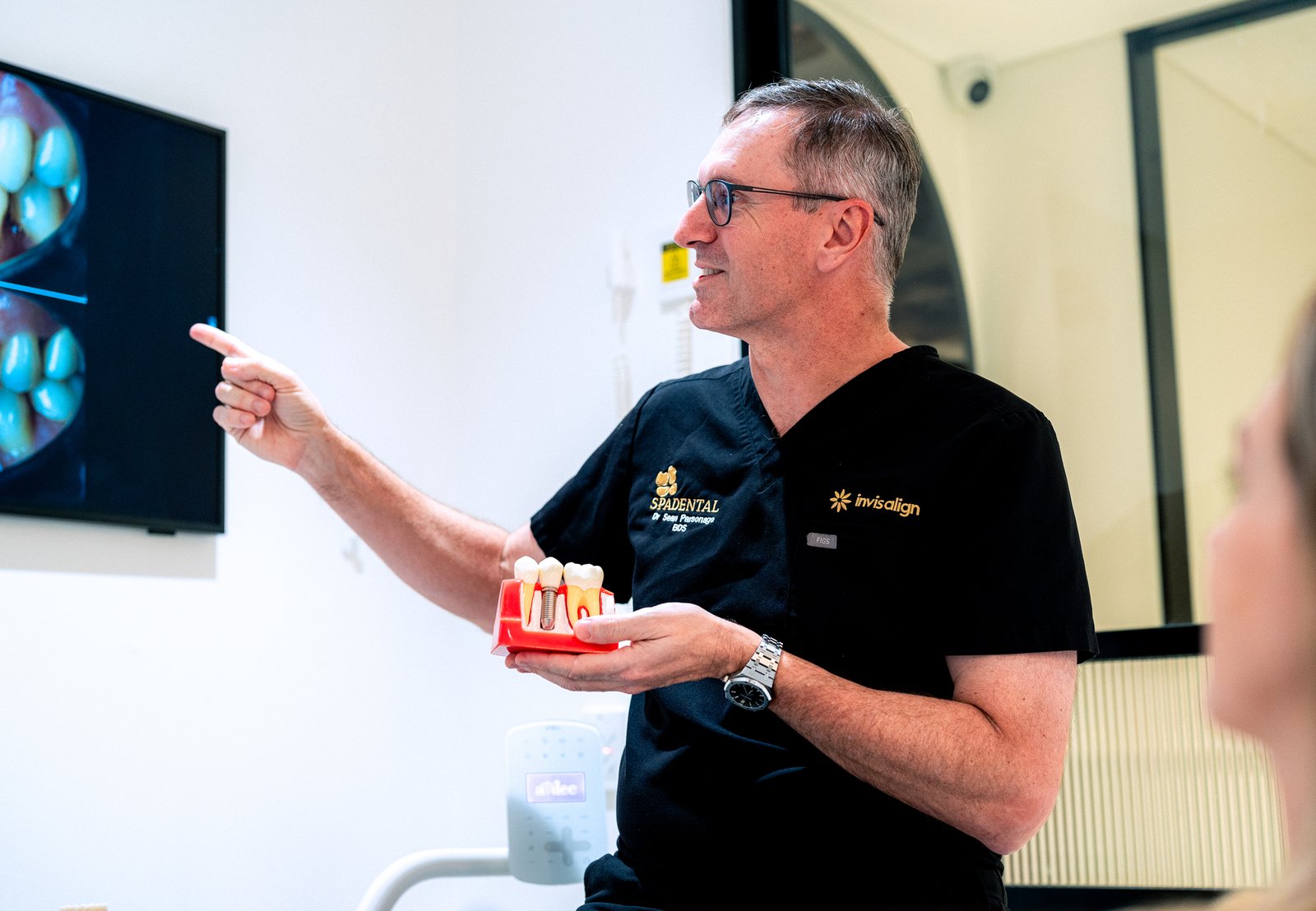
Multiple tooth implants means replacing more than one missing tooth using dental implants. There are two ways to do it, and the difference matters to your surgery, your healing and your invoice.
Both options are fixed. Neither comes out at night. Both rely on the same principle, which is that titanium fuses to living bone and keeps that bone loaded, so the jaw does not shrink back the way it does after tooth loss.
- One implant per tooth
Each missing tooth gets its own titanium fixture and its own crown. This is the right approach when the gaps are not next to each other, or when there are healthy teeth between them. Each tooth stands alone, so cleaning is exactly what you already do.
- An implant-supported bridge
Two or more implants carry a single bridge that replaces a run of teeth, up to four in a row. There are fewer surgical sites than placing four separate implants, and less total healing for you to get through. The trade-off is that cleaning under a bridge takes a little more care, which we show you how to do.


How many implants will you actually need?
This is the question most patients arrive with, and the honest answer is that it depends on four things: how many teeth are missing, whether they sit in a row, how much bone is available, and how hard that part of your bite works.
Some general patterns, which we then confirm on your scan:
| Missing teeth | Common approach |
|---|---|
| One tooth | One implant and one crown |
| Two to three teeth in a row | Often two implants carrying a bridge |
| Four teeth in a row | Often two implants, sometimes three, depending on bite load and bone |
| Most or all of an arch | All-On-X, four implants supporting a full arch |
Back teeth take heavier chewing forces than front teeth, so the same number of missing teeth can need a different number of implants depending on where they sit. Someone missing four front teeth will usually need fewer implants than someone missing four molars.
We work out the number of implants before we quote, so you are not paying for surgery you do not need, and not left short where the load genuinely demands more. If it is just one tooth, our single tooth implants page covers that case.
Individual implants or an implant-supported bridge?
Both replace several teeth. They are built differently and they behave differently day to day.
| Individual implants | Implant-supported bridge | |
|---|---|---|
| Implants required | One per missing tooth | Two or more, carrying a run of teeth |
| Teeth replaced | Any number, in any position | Up to four teeth in a row |
| Best for | Gaps that are not next to each other | Three or four missing teeth together |
| Surgery | More sites, one per tooth | Fewer sites, less total healing |
| Cleaning | Brush and floss as normal | Needs interdental brushes or floss threaders under the bridge |
| Guide cost | From $4,900 per fixed tooth replacement | Quoted as a whole at consultation |
Fewer implants usually means less surgical cost, but the bridge itself carries its own laboratory cost, so it is not automatically the cheaper option on every case. We quote the whole plan rather than the parts, so you can compare like with like.
If you would rather not have surgery at all, a conventional bridge supported by the neighbouring teeth is still a valid option for some cases. It does mean reducing those neighbouring teeth to carry it, and it does not preserve bone at the gap, which is the main reason we usually steer towards implants where the teeth either side are healthy. See Dental Crowns and Bridges Sydney, or our dental implants guide for every option side by side.
Why replace several missing teeth?
One missing tooth is a slow problem. Several missing teeth is a faster one, because the effects compound across a wider span.
Bone loss spreads. Every missing root means less load on that section of jaw. Over a wider span, the ridge flattens further and faster, and that changes what is possible later.
The bite loses support. When several teeth go, the remaining teeth take chewing forces they were not designed to carry. They wear, crack and loosen more quickly than they otherwise would.
The remaining teeth drift. Neighbours tilt into the gaps and opposing teeth over-erupt into the space, which can tilt your bite out of alignment over years.
Dentures become a moving target. Many patients arrive having worn a partial denture for years. As the jaw changes shape, the denture stops fitting, and it gets remade rather than solving the underlying problem.
Eating and speech change. Back teeth do the chewing, front teeth shape your speech. Lose several from either zone and both get harder.
Facial support softens. Multiple tooth loss plus bone loss reduces the support behind the lips, which is visible before it is comfortable to talk about.
Are you suitable for multiple tooth implants?
Most people missing several teeth can be treated. What we check before recommending anything:
Bone volume across the span. Multiple missing teeth usually means more bone loss than a single gap, so grafting is more common here. If you need it, it becomes a planned stage with a quoted cost, never a surprise halfway through.
Gum health. Gum disease is treated and stabilised first. Implants placed into active gum disease do not last.
Medical history and medication. Uncontrolled diabetes, some osteoporosis medications, blood thinners, immune conditions and smoking all affect how well an implant fuses. We ask about all of it, and we tell you plainly if any of it changes the recommendation.
The state of your remaining teeth. Sometimes the honest plan is to remove a failing tooth now rather than place an implant next to a tooth that will need replacing in two years. We would rather plan that once than twice.
Your bite as a whole. Multiple implants only work if they meet the opposing teeth evenly. We plan the bite, not just the gaps.
If implants are not the right answer for your case, we will say so and set out what is, including a conventional bridge or a denture.
What does the process involve?
Six stages, and most of the elapsed time is biology rather than appointments.
Consultation and scan
A full examination with X-rays, a 3D scan and photographs. We assess bone, gums, your bite and the remaining teeth, then tell you how many implants you need and why.
Preparatory work
Extractions, bone grafting or gum treatment, if your case needs it. Each is a planned stage with its own cost, not an add-on discovered later.
Implant placement
The implants are placed under local anaesthetic. It is a single appointment and you go home the same day. Where the site allows, temporary teeth are fitted so you are not left with a gap in the meantime.
Healing
The implants fuse to bone through osseointegration, which typically takes 3 to 6 months and can take longer depending on age and general health. If there is no sign of significant fusion at 12 months, we move to a different restorative approach rather than persist with one that is not working.
Test drive
Before your final teeth are made, digital previews and temporary restorations let you see and feel the result while there is still time to change it.
Final bridge or crowns
We scan, have your teeth custom made, and fit them. Then you are reviewed at six months and monitored at your regular visits after that.
What do multiple tooth implants cost in Sydney CBD?
Individual implants are $4,900 to $6,500 per fixed tooth replacement. That range covers the whole sequence, not just the surgery:
- Assessment, diagnosis and treatment plan
- X-rays and scan
- The Straumann® titanium implant
- Your custom crown
- All appointments across the treatment
- Post-treatment follow-ups


Smile now, pay later with
& we can help you apply for early release of superannuation where you’re eligible.
Not included, and quoted separately if you need them: bone grafting, extra extractions, and sedation. We identify these at consultation so the number you agree to is the number you pay. Paying for it: payment plans run from $28 to $73 per week on single and multiple implants, and from $127 per week on All-On-X. Through our National Dental Plan partnership you can access up to $9,000 with no interest. We also work with Afterpay, Zip and the major health funds, with HICAPS claims processed in-house so your rebate comes off the total before any plan is applied. Larger cases are staged against your actual appointments rather than charged as one lump sum upfront. See Treatment Plans Sydney and Payment Options Sydney.
Who plans and places them?
Multiple implant cases are prosthodontically planned, which means someone has to decide where each implant goes so the final teeth can be built on it. That planning is done before surgery, not during it.
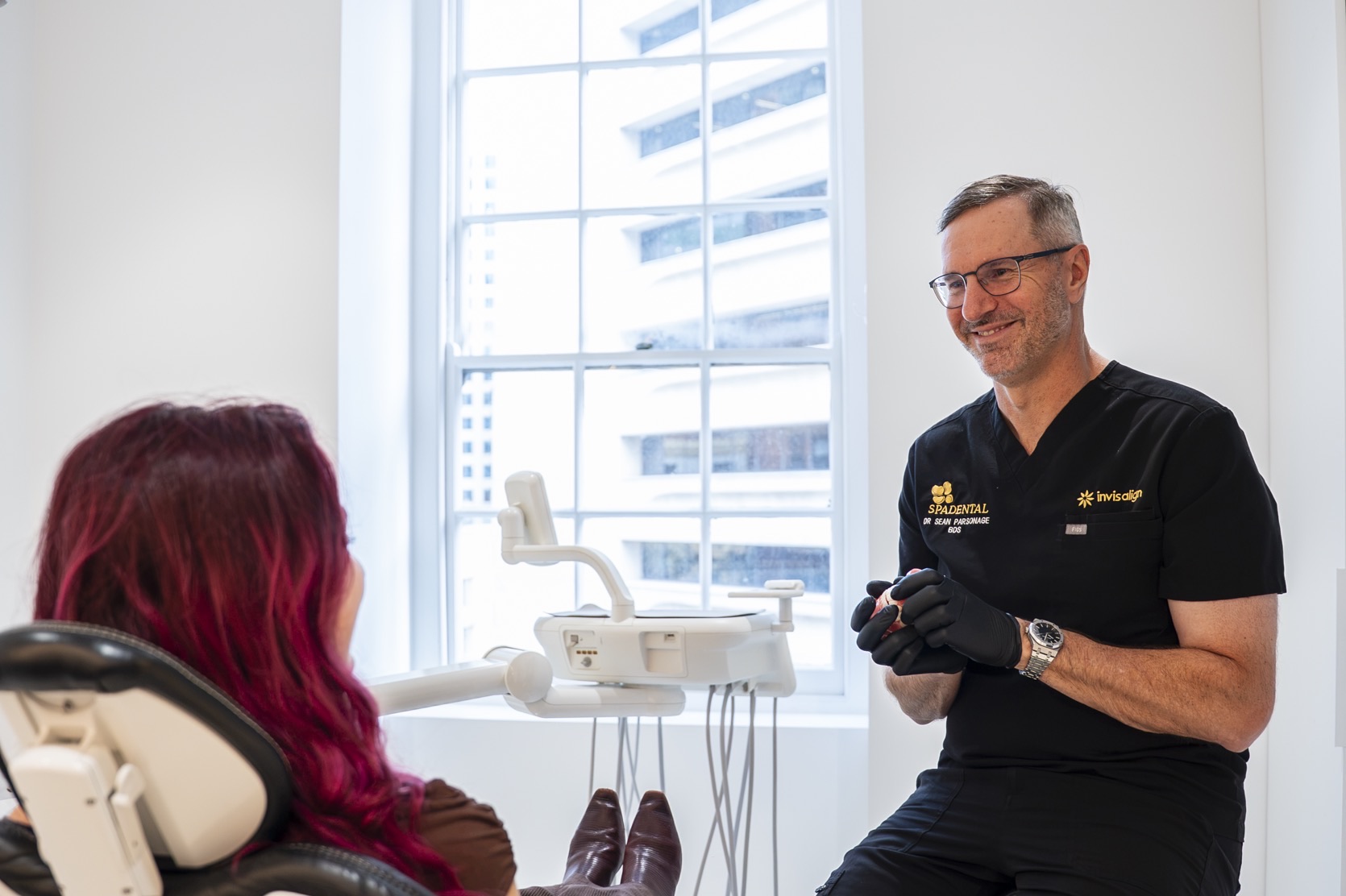
Dr Lawrence Neville holds a gIDE Dental Implant Master qualification, represents Invisalign internationally, and teaches other clinicians.
Dr Sean Parsonage holds a Graduate Diploma in Clinical Dentistry (Oral Implants).
Between them they bring over 30 years of dental experience to every case. The practice has placed 3,457+ implants and completed 85+ All-On-X transformations. Our dentists do not only practise their craft, they teach it. Meet the Spa team.
How long will multiple implants last?
With good care and regular review, implants commonly last 20 years and often longer. Every Straumann® implant placed here is guaranteed for 10 years with proper care and maintenance.
What keeps them working is ordinary: brushing twice a day, cleaning properly under any bridge, and coming in every six months so we can check the implants and the gum around them. Smoking and heavy alcohol use shorten the working life of an implant the same way they shorten the life of a natural tooth.
Every case is prosthodontically planned on a 3D scan, so each implant goes where the final teeth need it.
Dr Lawrence Neville (gIDE Dental Implant Master) and Dr Sean Parsonage (Grad Dip Clin Dent, Oral Implants) bring over 30 years of dental experience to every case.
Digital previews and temporary restorations let you see and feel the result while there is still time to change it.
Grafting, extractions and sedation are identified at consultation, so the number you agree to is the number you pay.
Consider reading, before you decide.
Download our free patient guides, featuring the ten best Invisalign® before and after transformations from our practice. Discover what's possible before you make any bookings.
Multiple Tooth Implants questions? We are glad you asked.
What patients ask us before replacing several missing teeth.
It depends on where the missing teeth sit and how much bone you have. As a guide, two or three missing teeth in a row are often carried by two implants, and four teeth in a row often need two or three. Missing teeth that are not next to each other each need their own implant. We confirm the number on your scan and quote from there.
Yes, and it is common practice. The implants are positioned at the ends of the gap so the bridge spans between them, and the load is carried through the implants rather than through the teeth either side. It is only appropriate where bone quality and bite forces allow it, which is exactly what the scan tells us.
A denture costs less upfront. Over time it usually costs more, because it needs relining and remaking as your jaw changes shape, and it does not preserve bone at the gaps. Implants cost more initially and are a fixed solution that you clean like teeth. Both are legitimate choices, and we will set out the honest comparison for your case rather than pushing one.
Usually several months from implant placement to final teeth, with 3 to 6 months of that being healing while the implants fuse to bone. If you need extractions or bone grafting, add time before that. We give you a realistic schedule at consultation, including the stages, rather than a single optimistic date.
Where the site allows, temporary teeth are fitted at the time of surgery so you are not walking around with a gap. What those temporaries can do depends on your case, and we tell you upfront what to expect rather than after the fact.
Often yes, and it is one of the more satisfying cases to treat. Long-term denture wear usually means some bone loss, so a scan comes first and grafting may be part of the plan. Plenty of patients who assumed they had left it too late are still very treatable.
The implants themselves need the same as teeth: brush twice a day, and clean the gum margin. The bridge needs a little more attention underneath, using interdental brushes or floss threaders so food and plaque do not collect where the bridge meets the gum. We show you the technique and check it at your six-monthly visits.

Missing more than one? Get a plan, not a guess.
Several missing teeth is worth a proper conversation with someone who plans the whole case before touching anything. Book a relaxed, no-obligation consultation in the heart of Sydney's CBD. We will assess your suitability, tell you how many implants you actually need and why, and confirm your cost before anything is booked in. If you are missing most or all of an arch, four implants can restore the whole arch: that is a different treatment with a different plan, and our All-On-X page covers it properly.
Spa Dental Sydney CBDSuite 2, Level 4, 64 Castlereagh Street, Sydney NSW 2000A two-minute walk from Martin Place.(02) 9067 9558Open: Monday 9:00am to 7:00pm · Tuesday to Friday 9:00am to 5:00pm · Saturday by appointment request


Begin your spa journey
Your smile. Our style.
We are open Monday through Friday by appointment. Give us a call at (02) 9067 9558 to schedule your visit.
